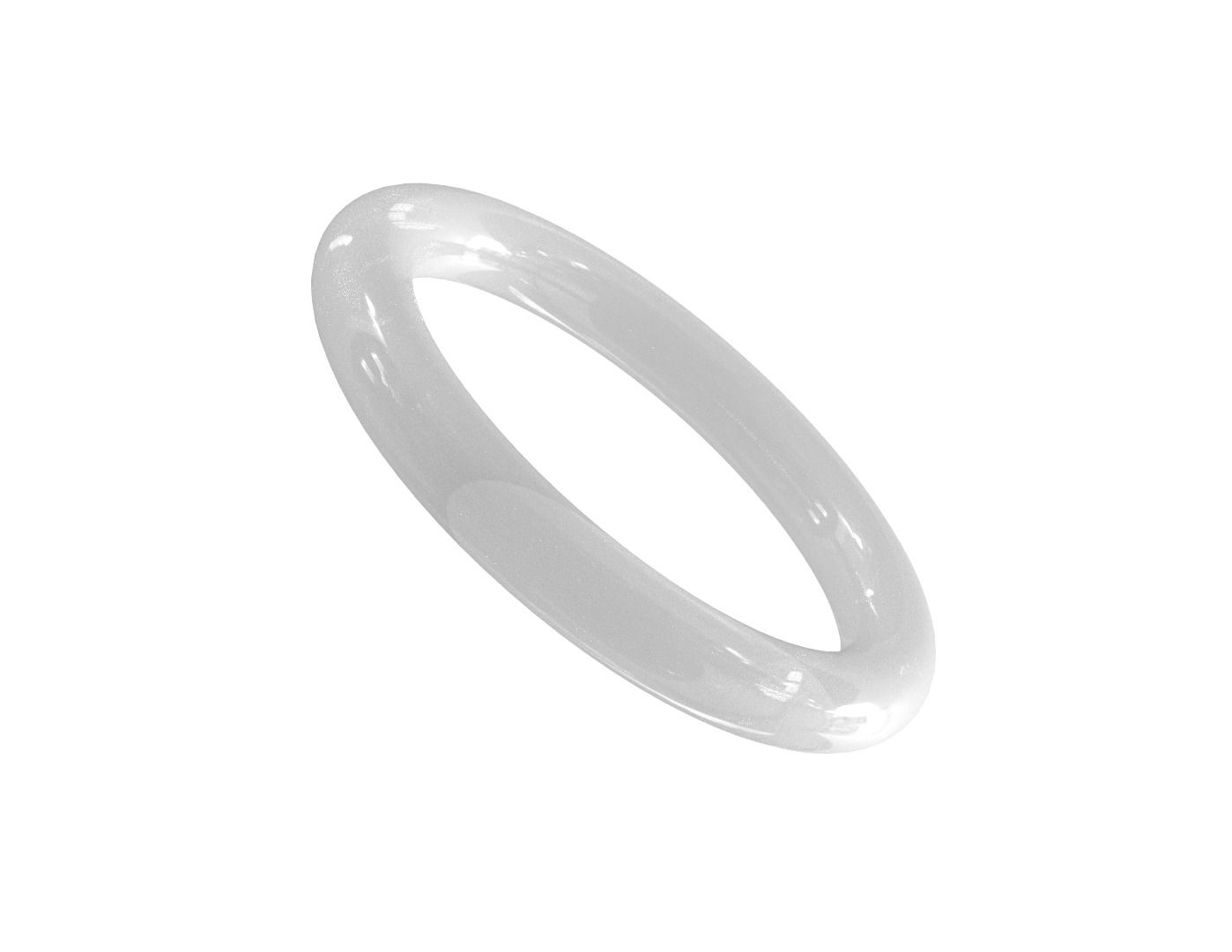
O-Rings - PTFE (Teflon™), FDA
O-rings are circular sealing rings with a round cross-section. When an O-ring is fitted into a groove and compressed between two surfaces, it forms a seal that prevents the escape of liquids or gases.
These O-rings are made from solid PTFE (polytetrafluoroethylene), a fluoroplastic rather than a rubber. PTFE has almost universal chemical resistance and an exceptionally wide working temperature range, and it has a low-friction surface. PTFE O-rings are used where standard rubber O-rings cannot withstand the chemical or thermal conditions of the application.
The material complies with FDA requirements for food contact.
Chemical Compatibility
PTFE is resistant to almost all chemicals, including acids, alkalis and solvents.
Limitations
PTFE is not recommended for use with molten alkali metals, elemental fluorine or certain fluorine and halogen compounds. Unlike rubber, PTFE is not elastic and cannot be stretched. Under sustained pressure, it slowly and permanently deforms (known as cold flow), which can reduce sealing force over time. For these reasons, PTFE O-rings are primarily used for static sealing.
Applications
These O-rings are suitable for static seals in the food, pharmaceutical, chemical and petrochemical industries.
Installation Guidance
Make sure that the groove and mating surfaces are clean and free from burrs. Because PTFE cannot be stretched, the housing must allow the O-ring to be fitted without stretching it. Keep compression to the minimum required for sealing, to limit cold flow.
All dimensions are nominal. The information provided by AH Design Components Ltd is for reference only and is not a manufacturing specification. Please confirm that the product is suitable for your application before use.